
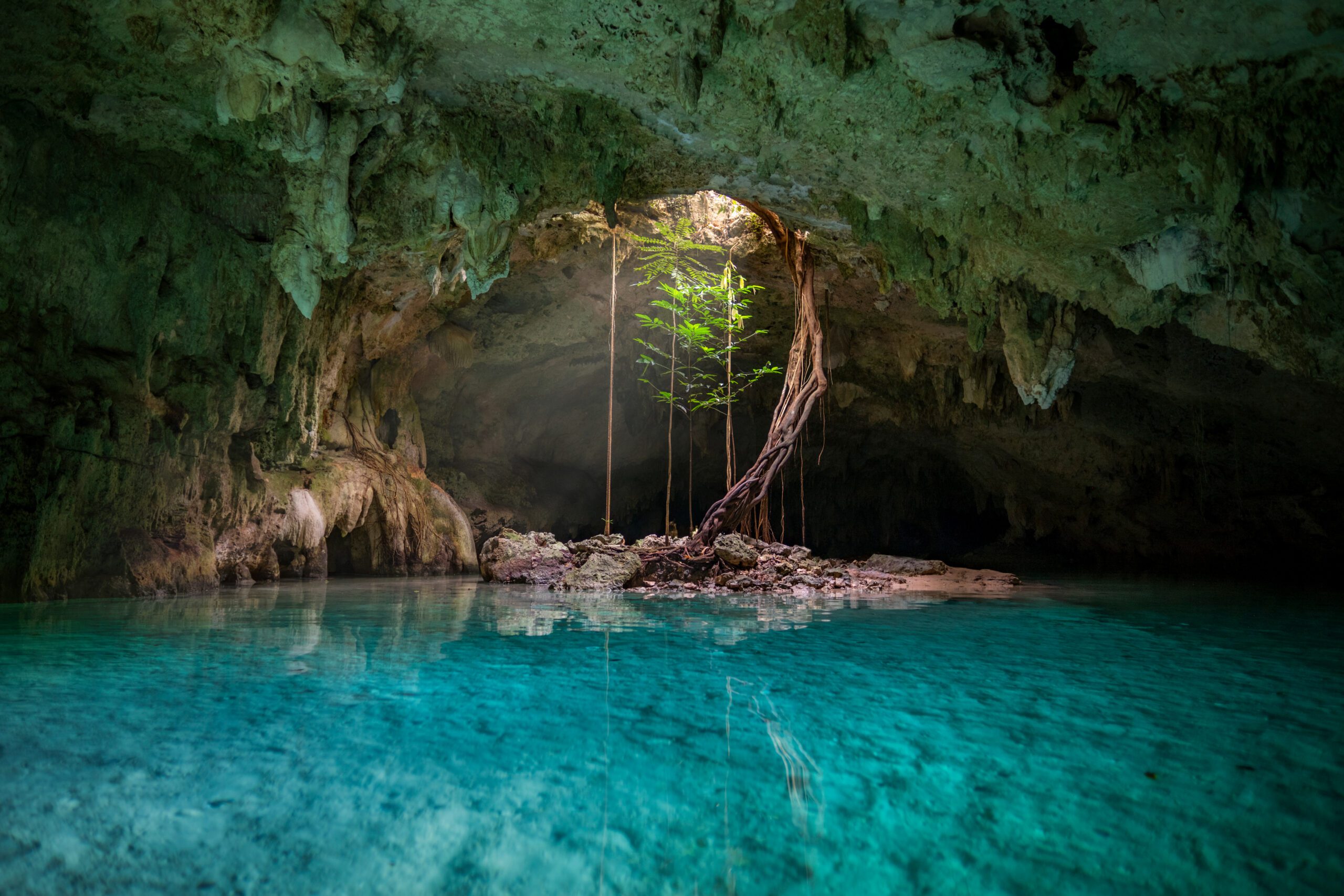
Why Quintana Roo Has So Many Cenotes
In most places, water flows on the surface.
In Quintana Roo… it disappears underground.
And that’s exactly why cenotes exist here.
🌿 A Land Made of Limestone
The entire Yucatán Peninsula is formed by porous limestone rock.
Unlike solid ground, this type of rock allows rainwater to seep through easily.
Over thousands of years, that water slowly dissolves the limestone, creating:
- Underground rivers
- Cave systems
- Natural sinkholes
Those sinkholes… are cenotes.
💧 No Rivers—But Water Everywhere
One of the most surprising things about Quintana Roo:
There are almost no visible rivers.
Instead, all the freshwater flows beneath your feet.
Cenotes are the natural “windows” into that underground system—giving access to some of the clearest water in the world.
🌊 Part of a Massive Underground Network
These aren’t isolated spots.
They’re connected.
The region is home to one of the largest underwater cave systems on Earth—stretching for hundreds of kilometers beneath the jungle.
That’s why every cenote feels different, but all are part of the same hidden world.
🌿 More Than Just Beautiful
For the ancient Maya, cenotes were sacred.
They were seen as portals to the underworld—and sources of life.
Today, they remain one of the most unique natural features of the region.
Cenotes aren’t just random pools.
They’re the result of thousands of years of geology, water, and time—working quietly beneath the surface.
And once you step into one… you understand why they’re so special. 🌊✨